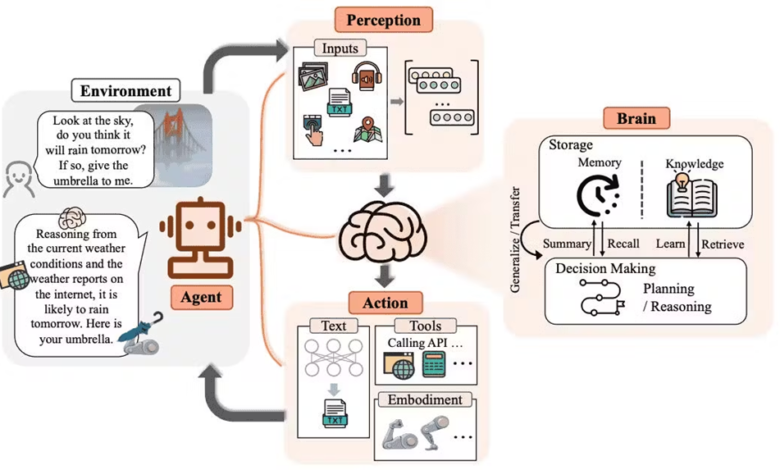
Artificial Intelligence (AI) has evolved from simple machine learning models into autonomous, goal-driven agents capable of reasoning, planning, and continuous improvement. These Agentic AI systems are transforming how enterprises operate—streamlining workflows, enhancing decision-making, and enabling businesses to function with unprecedented efficiency.
As organizations move toward AI-first operations, understanding how AI agents communicate and collaborate is becoming essential for building scalable, intelligent ecosystems.
The Shift from Traditional AI to Agentic AI
Conventional AI systems rely on predefined rules or narrow datasets to perform specific tasks. While useful, they lack adaptability and contextual awareness. Agentic AI, on the other hand, introduces autonomy—allowing systems to perceive, reason, and act based on dynamic goals and real-time feedback.
These AI agents can interact with other systems, share data, and make independent decisions. This shift from automation to orchestration marks the beginning of a new era where machines don’t just execute commands—they collaborate intelligently.
See also: What Albury Homeowners Need To Know About Termite Inspection
Understanding the A2A Protocol: The Language of AI Agents
A major enabler of this transformation is the Agent-to-Agent (A2A) protocol, a standardized way for AI agents to communicate and coordinate with each other.
The A2A Protocol plays a critical role in building scalable multi-agent ecosystems. It defines how agents exchange messages, share context, and resolve conflicts during collaboration. This protocol ensures interoperability—allowing agents built on different architectures or platforms to work seamlessly together.
Why A2A Matters for Enterprise AI
- Scalability: Enterprises can deploy thousands of agents that work collaboratively without manual configuration.
- Flexibility: New agents can be added to the ecosystem without disrupting existing workflows.
- Efficiency: Tasks such as contract analysis, compliance validation, or data reconciliation can be distributed across specialized agents for faster execution.
By leveraging the A2A protocol, organizations create a foundation for intelligent coordination—a crucial step toward true enterprise autonomy.
The Power of AI Exploration: Accelerating Innovation
As AI ecosystems expand, companies need ways to explore, test, and validate complex agent behaviors efficiently. This is where tools like ZBrain Xplr are transforming the landscape.
ZBrain Xplr is designed to help teams experiment, visualize, and optimize AI agent workflows. It allows developers and enterprises to test multi-agent systems in controlled environments, identify performance bottlenecks, and understand how agents interact in real-world scenarios.
Key Benefits of ZBrain Xplr
- Visual Workflow Mapping: See how agents interact, exchange data, and complete tasks end-to-end.
- Rapid Prototyping: Deploy and evaluate new agents quickly without heavy coding.
- Data-Driven Insights: Access logs, performance metrics, and outcome visualizations for smarter optimization.
This experimental framework bridges the gap between conceptual AI and practical deployment—enabling businesses to innovate safely and efficiently.
Building Enterprise-Grade Multi-Agent Systems
For enterprises, adopting agentic AI isn’t just about technology—it’s about architecture, governance, and strategy. A robust multi-agent framework includes:
1. Defined Roles and Goals
Each agent must have a clear purpose, whether it’s data validation, financial forecasting, or document processing. This clarity reduces redundancy and enhances collaboration.
2. Knowledge Base Integration
Agents rely on contextual data to make informed decisions. Integrating them with enterprise knowledge bases, CRMs, and document repositories ensures relevance and accuracy.
3. Continuous Learning Loops
Feedback mechanisms allow agents to learn from outcomes and improve over time, minimizing human intervention.
4. Security and Compliance
With multiple agents exchanging sensitive data, enforcing authentication, encryption, and regulatory compliance is vital.
When implemented correctly, multi-agent systems can manage complex processes like due diligence, contract validation, or logistics optimization—tasks that traditionally require extensive manual effort.
The Future of Agentic AI in Business
In the coming years, we’ll see AI agents taking on increasingly strategic roles. From autonomous compliance monitoring to real-time financial analysis, Agentic AI will serve as the digital workforce powering enterprise innovation.
Trends Driving Adoption
- LLM Integration: Large language models (LLMs) enhance reasoning and contextual understanding across tasks.
- Dynamic Collaboration: Multiple agents dynamically form teams to handle multi-step objectives.
- Custom AI Ecosystems: Platforms like ZBrain empower organizations to design and deploy tailored agents aligned with business goals.
As AI maturity grows, the line between human and machine collaboration will continue to blur—ushering in an era of AI-augmented decision-making and self-optimizing enterprises.
Conclusion
The rise of Agentic AI marks a defining shift in enterprise automation. With innovations like the A2A protocol enabling seamless communication and tools like ZBrain Xplr facilitating rapid experimentation, businesses are now equipped to harness the full potential of autonomous systems.
Organizations that embrace this evolution early will lead the next phase of digital transformation—one powered not just by intelligence, but by intelligent collaboration.